

About Richard Jordan
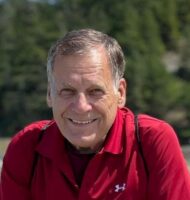
Job title: Clinical Associate Professor
Degrees: BS ’79, MD ’83, MSS (Seattle WWAMI)
Career stage: Retired
State of practice: Gig Harbor, Washington
Current practice settings: Academic medicine / teaching hospital, Government / military healthcare, Healthcare administration / leadership
Lived career experiences/transitions:
- Changing specialty
- Starting a family while maintaining a full-time practice
- Leaving a practice
- Starting a private practice
- Returning to clinical practice
- Retiring from practice
- Non-clinical careers
- Work/life balance
Graduation year from the UW School of Medicine: 1983
Specialty/subspecialty: Internal Medicine/Hospitalist
Residency: Intern – Sacred Heart, Spokane WA, IM-UC Davis
Fellowship: UC Davis – CARES
Teaching roles: Clinical Instructor UC Davis, Associate Professor – USUHS
Research or other professional interests: Health Care Quality/Patient Safety, Medical Economics
Richard’s Bio:
My path into medicine started long before I ever put on a white coat. After high school, I enlisted in the Air Force and trained first as a combat medic, then later as a Special Operations Combat Controller. As a HALO Jumpmaster on Team 4 at Pope AFB, I learned discipline, teamwork, and how to stay focused under extreme pressure, skills that stayed with me when I left the service in 1975 to begin college and eventually pursue medicine. I earned my medical degree from the University of Washington School of Medicine, completed internal medicine training, and later a clinical fellowship in immunology and HIV management. After several years in civilian practice, I returned to military service as a physician and spent the next 18 years in the U.S. Army Medical Corps with diverse assignments including being the Commander and Surgeon for U.S. Army Japan, Deputy Commander of Landstuhl Regional Medical Center during high operational tempo of OIF, Chief of Staff and later Chief Medical Officer of the European Regional Medical Command, Commander of the 212th Combat Support Hospital and ended as the Executive Director of TRICARE Eurasia–Africa. Those years taught me what it means to lead in uncertainty and the importance of building resilient clinical teams. Following retirement from the Military, I served two years in Baghdad, Iraq as the Chief Medical Officer of CHS-I, leading a multinational medical team supporting the U.S. Dept. of State and international diplomatic corps involved in Iraq’s reconstruction and countering the invasion of ISIS. Providing leadership and direct medical care in that environment was both challenging and deeply meaningful, and broadened my perspective on global health, diplomacy, and the role of medicine in complex international missions. Returning to the U.S., I re-entered full time internal medicine practice before moving into healthcare quality and patient safety leadership in 2018, ultimately serving as Executive Director for Quality and Patient Safety at Madigan Army Medical Center. I spent the next seven years mentoring physicians and healthcare administrative leaders in both the military and VA healthcare systems on the fundamental principles of High Reliability Organizational development and Just Culture, finally retiring in February of 2025. Teaching has been a constant throughout my career. As a fellow with Stanford Medicine’s Center for Improvement and Clinical Associate Professor at the Uniformed Services University, my commitment to building safer, more reliable healthcare systems continues to evolve and I enjoy working with learners who are exploring internal medicine, military service, global health, or healthcare leadership in complex systems.